%201.svg)


Optimize Oil & Gas Operations with Satellite IoT
Petroleum producers from around the globe realize decreased costs and increased efficiencies using satellite-cellular dual-mode IoT solution.
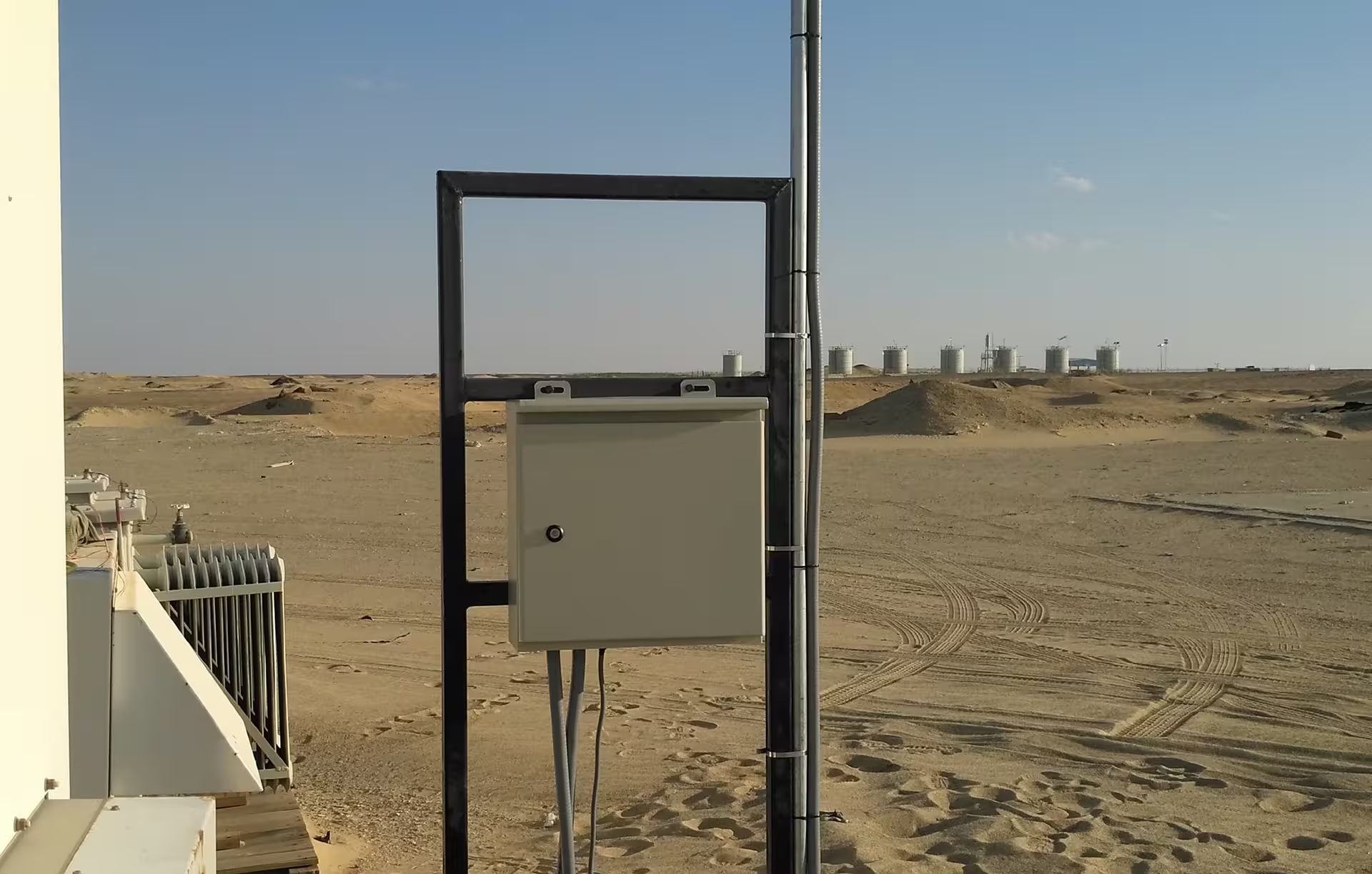


Overview
The oil and gas industry has a significant influence on the global economy, generating over USD 4.2 trillion in revenue and achieving double-digit compound annual growth rates.
For oil producers, technology plays a key role in helping petroleum companies keep pace with ever-changing demand and increasing regulatory requirements.
Since 2009, Numerica and SKYWAVE® have helped digitize the petroleum industry through industrial IoT applications, hardware, and services. Numerica’s WellMonitor Supervisory Control and Data Acquisition (SCADA) solution enables petroleum producers to remotely monitor and control artificial lift systems, optimize oil production, extend equipment lifespans, help meet or exceed regulatory requirements, and reduce labor and transportation costs.
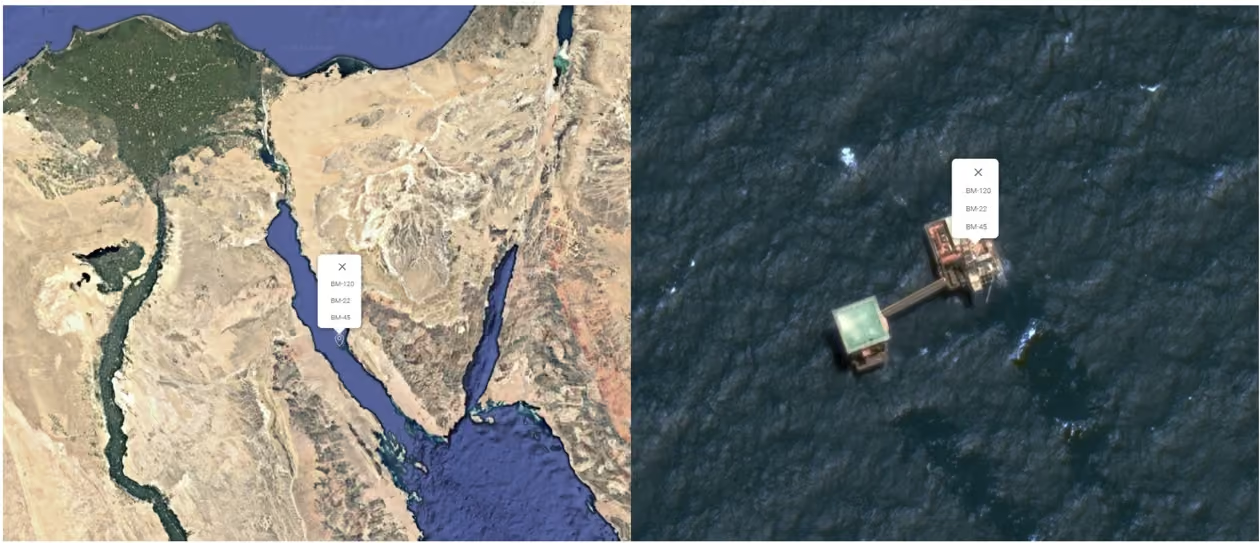
The Challenge
Oil producers face a wide range of challenges. Petroleum production is expensive, complex, and requires coordination and precision to be profitable. In addition, the petroleum industry is becoming increasingly regulated as environmental initiatives continue to evolve. One of the keys to success is managing costs throughout the production process.
According to Farid Majana, Real Time Operations Manager at Numerica, this can be achieved through IoT solutions with reliable connectivity.
“By the very nature of the industry, oil and gas operations are conducted in remote, rugged, and environmentally challenging environments.
Traditionally, petroleum companies have relied on direct, hands-on management of wells by engineers. This requires driving long distances or even boarding ships so engineers can directly observe the status and performance of wells operating across widely distributed geographical areas.
The operating conditions of wells can change rapidly, yet data is often difficult to access because reliable connectivity in remote areas is limited or unavailable. To remain competitive and optimize production, petroleum companies require more reliable and secure connectivity,” says Majana.
The Solution
Numerica’s WellMonitor leverages SKYWAVE technology—including dual-mode satellite-cellular services and hardware—to enable its customers to connect to well pumps even when cellular coverage is unavailable. Petroleum industry engineers can access data—including well motor frequency, voltage, current, temperature, intake and discharge pressures, vibrations, and more—via a web browser or smartphone app, making remote field operations more accessible. It also allows engineers to remotely control pump processes so they can respond to changing conditions more quickly without needing to send personnel to a site.
WellMonitor can also be used for remote troubleshooting, providing alerts before problems become mission-critical and reducing the time required to resolve issues, improving efficiency, utilization, and production. WellMonitor uses AI to automatically detect unwanted operational events, such as the presence of gas at an early stage, allowing the necessary corrective actions to be taken to avoid production losses and pump damage.
With SKYWAVE’s smart programmable terminals and flexible satellite services, data can be processed at the edge using applications that run directly on the terminals. This can reduce satellite connectivity costs, as users can choose which specific data is sent—and when—rather than transmitting all data to WellMonitor.
SKYWAVE’s two-way communication capabilities enable engineers to remotely manage maintenance and operational settings for up to 15 devices per WellMonitor system, reducing the time and cost associated with traveling to well locations. This includes changing motor frequency and turning well pumps and power generators on or off. WellMonitor also provides live operational calculations, including oil production and pump performance, that engineers can use to ensure optimal output from each well and resolve issues remotely.
“WellMonitor includes an accessible, user-friendly application. It provides full access to data across well operations and enables users to start and stop well pumps, adjust pump operating frequency, and set optimal operating ranges for pumps and generators. The system logs all changes made in the field or remotely. The WellMonitor application also sends alerts whenever equipment operates outside its defined operating ranges,” says Majana.
Numerica WellMonitor Benefits
- Improves oil production through efficient pumping system operations.
- Provides operating data to identify optimization opportunities.
- Increases the lifespan of well pumps, generators, and other surface equipment.
- Accelerates issue resolution through immediate notification of any issues.
- Decreases maintenance spending by eliminating the need for maintenance workers to visit each well to determine its operating health.
- Improves remote operational visibility through reliable dual-mode connectivity.
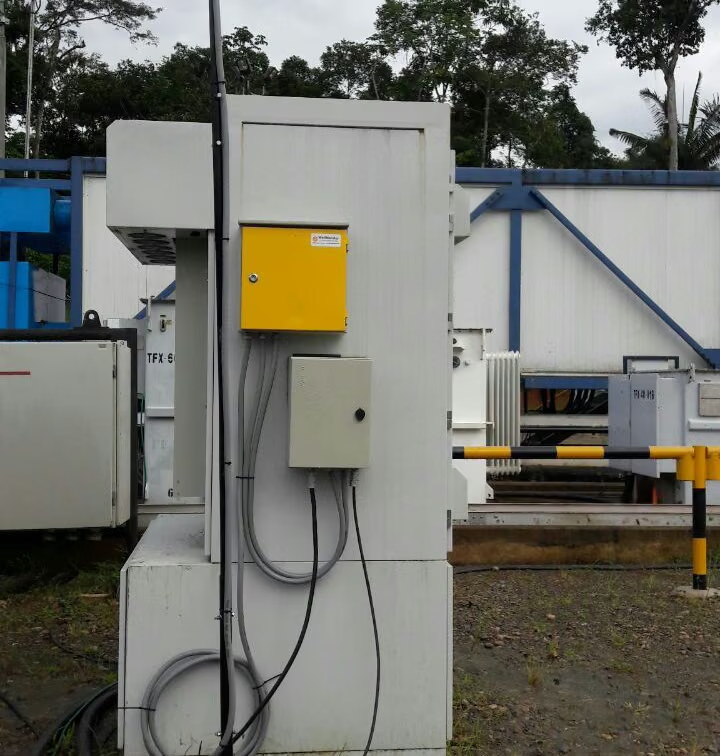
Results
Deployed across more than 10 countries in the Middle East, Africa, and Latin America, Numerica’s WellMonitor has been delivering results for well over a decade and is used to monitor more than 1,000 wells worldwide.
“Our plug-and-play solution makes deployment easy. As a low-size, low-weight, and low-power solution that works globally and can be installed anywhere in the world to control up to 15 field devices per communication system, it can be tailored to meet unique client requirements,” says Majana.
More Case Studies

%201.svg)