%201.svg)


Enabling efficient agricultural irrigation via satellite
Only 2.5% of the water on Earth is freshwater, of which only 1% is accessible, according to National Geographic. Despite the scarcity of this resource, the OECD says that the agriculture industry consumes about 70% of the world’s supply. Precision irrigation systems using telemetry solutions are fundamental not only to the preservation of this precious resource, but to optimizing crop output and monitoring equipment for farmers.


About Ponce
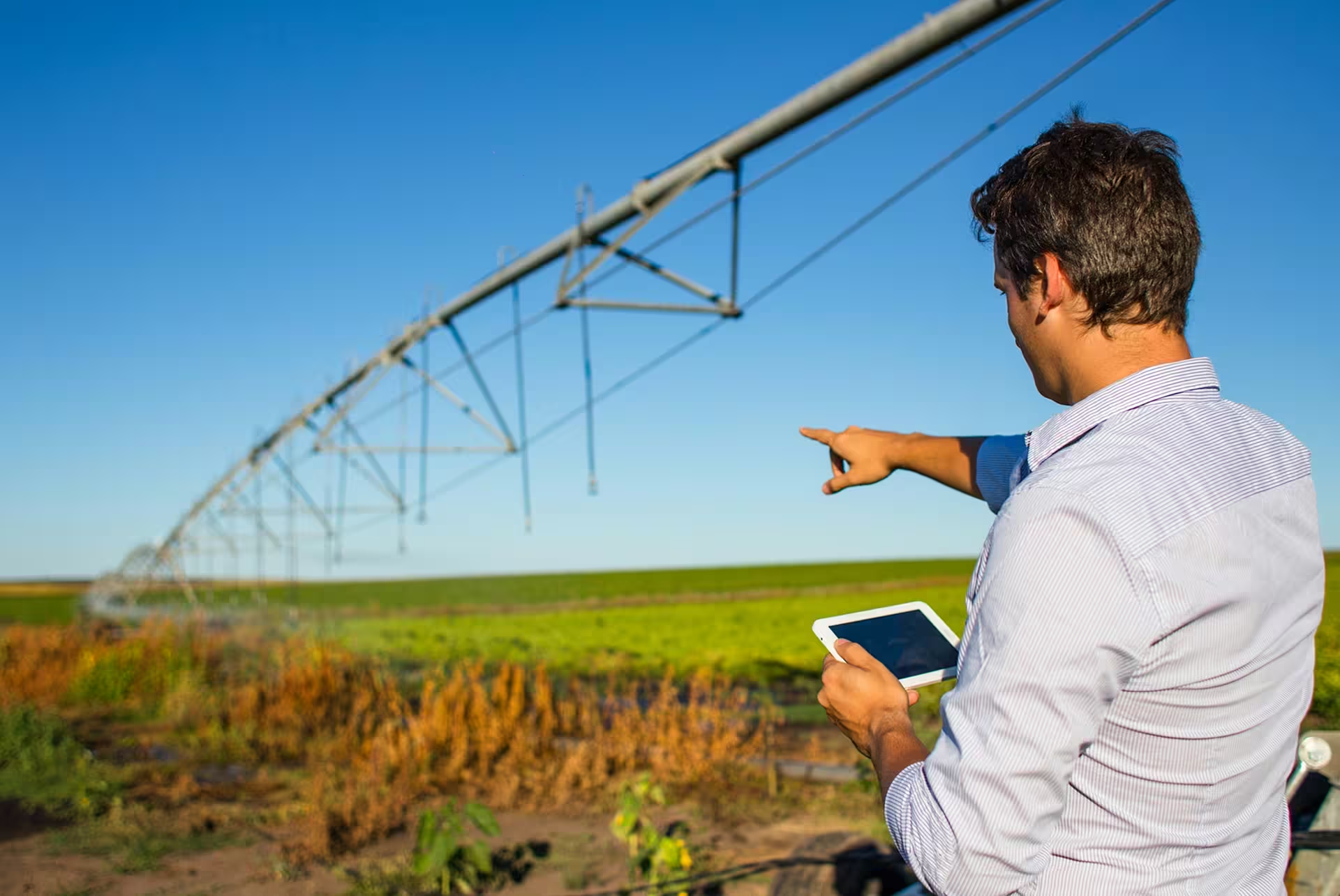
Ponce is an IoT company specializing in agricultural irrigation efficiency. Based in Argentina, Ponce helps farmers across Latin America preserve water, reduce costs, and save time.
Its advanced irrigation monitoring solution has revolutionized irrigation operations for many farmers, including La Guía, a leading agricultural grower for Bayer in Argentina specializing in crop and seed farming.
The solution developed by Ponce optimizes agricultural irrigation. It enables the early detection of machine failures while precisely irrigating crops, mitigating water loss, reducing operating expenses, and supporting key decision-making for farmers.
Ponce’s solution is powered by SKYWAVE’s IsatData Pro satellite network and connected to a SKYWAVE OGi modem, enabling real-time management of irrigation equipment. It also helps monitor and reduce the environmental impact of farming.
The challenge
In the world of irrigation, faulty machinery is costly. When a machine breaks down, it can cause significant water waste and crop destruction.
Most farmers have relied on the same failure detection method for years: sending an operator on-site to inspect equipment. Many of these locations are extremely remote, requiring several hours of travel to perform inspections. This process has long been overdue for modernization.
Poor irrigation can lead to two key problems affecting crops: water stress and root suffocation. Water stress occurs when crops do not receive enough water for proper photosynthesis, while root suffocation is the “drowning” of roots, preventing them from absorbing oxygen through waterlogged soil. These irrigation problems are primarily caused by inconsistent irrigation, the late detection of machinery failures, and human error in the calibration and operation of irrigation equipment.
Without a reliable irrigation monitoring system, a machinery failure may take more than a day to be detected. This can result in significant costs due to water waste, excess energy consumption, and crop destruction. Farmers operate with high expenses and extremely narrow profit margins, so irrigation problems can mean the difference between the survival and failure of a farm.
To compound these challenges, many modern farmers have moved away from the countryside as part of the rural exodus. Farmers who no longer live on their farms must travel even greater distances to inspect crops and equipment, creating additional challenges. These include increased vehicle wear and tear, higher fuel consumption, longer labor shifts, and increased labor costs due to the need to hire more employees.
The longer it takes for equipment failures to be detected and resolved, the more catastrophic the damage to crops and the higher the associated costs. Most telemetry systems available on the market are not a viable option because many farms are located in remote regions where cellular infrastructure is insufficient. Unavailable or unreliable cellular coverage can prevent the transmission of field data, causing notifications and alerts to fail.
Before implementing Ponce’s solution, farmers typically inspected their irrigation systems once or twice a day, consuming significant amounts of time and fuel. If a machine failed immediately after an inspection, the failure often would not be detected until the next inspection round.
In Argentina, an average grower may travel 200 kilometers or more in a single day to supervise and operate field equipment. Irrigation machinery handles an average flow of 200 cubic meters per hour, and an average equipment failure can last up to ten hours before being detected. That represents more than two million liters of wasted water. Irrigation machinery typically fails three times per growing season, meaning a single machine can waste approximately six million liters of water each year.
The solution
To address the key challenges faced by farmers, Ponce developed an irrigation monitoring system that helps farmers save significant time, money, and effort while also conserving water.
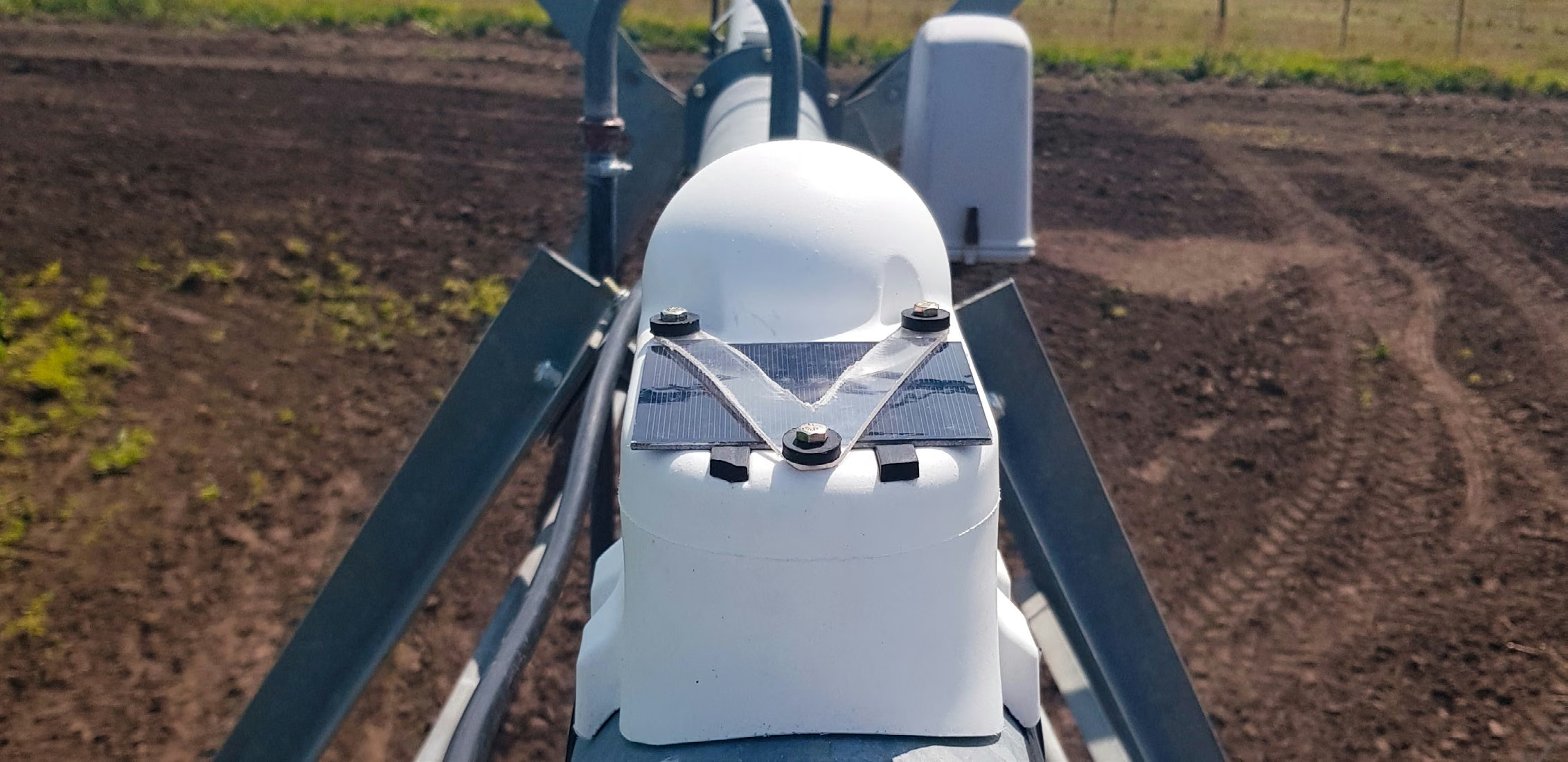
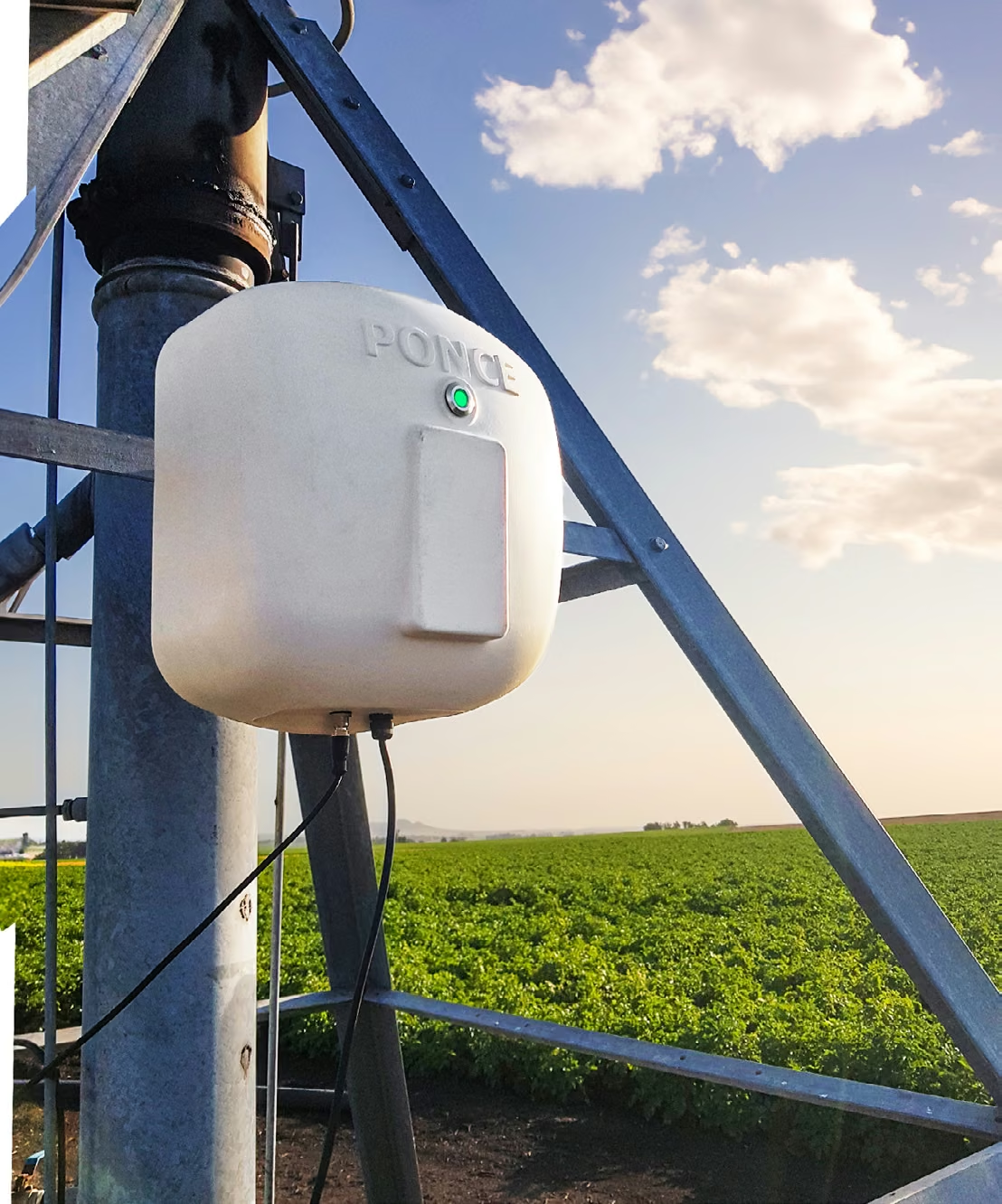
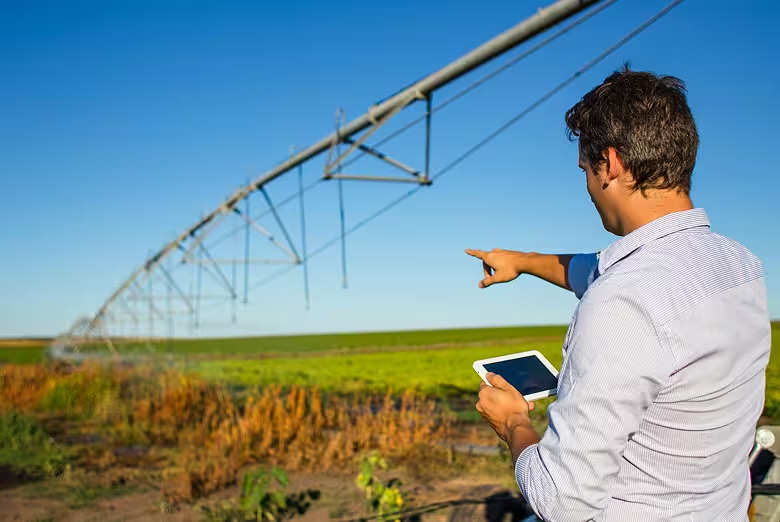
The devices installed on irrigation equipment report machine position, water pressure, and other parameters, which are transmitted to the OGi modem. The modem sends this information via satellite to Ponce’s cloud platform. The cloud then delivers real-time alerts and reports to farmers’ mobile devices.
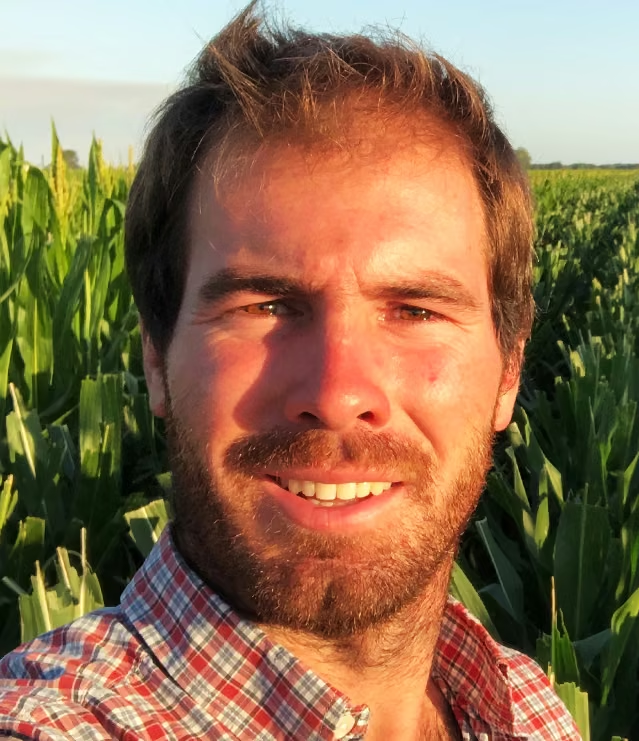
According to Ponce CEO José Robetto, satellite connectivity is crucial to the system, not only for reliable operation in remote locations but also for the rapid delivery of alerts.
“We work with many farmers in remote regions where cellular coverage is unavailable for equipment monitoring,” says Robetto.
“SKYWAVE’s IsatData Pro satellite network enables us to provide global coverage.”
Ponce’s solution also enables farmers to receive notifications of abnormalities that require further inspection. Additional data points include operating hours, water usage, water flow, and rainfall measurements. This information helps farmers determine optimal irrigation schedules.
Farmers can monitor the amount of water being dispensed by the irrigation system, as well as the movement and position of irrigation equipment.
“Our solution gives farmers peace of mind, knowing that their machinery is in excellent working order and is being monitored 24 hours a day, seven days a week,” says Robetto.
The Ponce solution is brand-agnostic, meaning it can be used with any agricultural irrigation equipment for virtually any soil or crop management application without interfering with normal machinery operations.
Results
Farmers who use Ponce’s solution report substantial savings in production costs, driven by improved equipment uptime, reduced crop losses, and lower operating costs. Real-time monitoring is available through a mobile app, and alerts are delivered via SMS and WhatsApp, enabling farmers to monitor their equipment anytime, anywhere.
Additional reports support farmers in planning, administration, and maintenance activities.
One of Ponce’s customers, La Guía, uses the solution across more than 2,000 hectares of land with 19 irrigation machines. According to La Guía administrator Francisco Lodos, the company chose Ponce’s solution because of its unique feature set, including satellite coverage in remote areas.
“Prior to implementing this solution, equipment inspections took two to three hours per day, and the inspector had to drive more than 40 kilometers just to visit each site,” says Lodos.
“Now, everyone at La Guía has the Ponce mobile app on their phone, so when a notification is received over the SKYWAVE network, the entire team is alerted immediately. Additionally, La Guía saves an estimated 90 hours of water waste per year, representing significant environmental and cost savings.”
To further increase these cost savings, La Guía reports that Ponce’s solution is available at a lower cost than comparable alternatives. While alternative solutions rely solely on alarms to notify users of equipment failures, Ponce takes the solution one step further.
If the failure is not resolved after an automated alarm is sent, a call center representative will contact the farmer by phone to ensure they are aware of the issue. This additional layer of protection ensures that farmers are notified, even in the middle of the night.
“Thanks to Ponce’s solution, we have achieved significant improvements in water usage efficiency and equipment failure responsiveness,” says Lodos. “In the past, when a machine failed, we might not discover the problem for hours. Now, Ponce’s system notifies us immediately. Even better, if we do not respond to the notification right away, we receive a follow-up phone call to ensure the issue is resolved quickly. This saves us significant costs and helps us protect our most valuable resource—water.”
Ponce’s irrigation solution reduces the risks and costs associated with human error in irrigation scheduling. The data-driven system helps farmers determine optimal irrigation schedules and water volumes, saving money while reducing water waste. Precision irrigation increases crop profitability and reduces environmental risks.
Ponce’s solution not only helps reduce water waste but also decreases the number of field inspection trips, excess energy consumption, crop losses, and operating costs.
These reductions in operating expenses are a key contributor to the overall cost savings delivered by the solution. Fewer field visits not only reduce the number of working hours allocated to inspections but also minimize the risk of accidents or delays caused by poor road conditions. Ponce’s customers report an average fuel savings of 50% due to fewer inspection trips while also reducing vehicle wear and tear.
To make this solution accessible to as many farmers as possible, Ponce developed a system that can be integrated with virtually any automated irrigation equipment. This means farmers do not need to replace their existing machinery to achieve automation. The turnkey solution enables farmers to save time, reduce costs, and conserve the resource on which we all depend: water.
More Case Studies

%201.svg)